
Webber Landscaping provides professional sod installation in Winston-Salem, NC and throughout the Piedmont Triad. Sod installation delivers an instant, fully established lawn that would take months or years to grow from seed. Within two to three weeks of proper watering, sod roots into the underlying soil and becomes a permanent, usable lawn.
Unlike seeding, sod eliminates the waiting period, the risk of washout on slopes, and the weed competition that plagues newly seeded lawns in the Winston-Salem area. The NC State University turfgrass program reports that sod establishes 90% root contact with underlying soil within 14 days when properly installed and watered. For properties across Winston-Salem, Greensboro, Kernersville, and the wider Triad, professional sod installation is the fastest path to a beautiful lawn.
Every sod installation we perform includes soil preparation and finish grading as part of the project. Laying sod on unprepared soil produces poor results. We grade the surface smooth, amend the soil as needed for the Piedmont's clay conditions, and ensure proper drainage before a single piece of sod is placed.
Types of Sod for the NC Piedmont
Winston-Salem sits in the transition zone between warm-season and cool-season grasses, which means both types can grow here, but each has distinct advantages. Choosing the right grass for your property's sun exposure, intended use, and maintenance preferences is the most important decision in any sod project.
| Grass Type | Sun Requirement | Best For | Mow Height | Key Characteristics |
|---|---|---|---|---|
| Tall Fescue | Full sun to moderate shade | Most residential lawns, shaded yards | 3.5 - 4 inches | Most popular in Winston-Salem. Stays green year-round. Tolerates shade better than warm-season options. Deep root system handles drought once established. |
| Bermuda | Full sun (8+ hours) | Commercial properties, sports fields, full-sun residential | 1 - 2 inches | Extremely durable and heat-tolerant. Recovers quickly from wear. Goes dormant (brown) in winter. Requires full sun to thrive. |
| Zoysia | Full sun to light shade | Premium residential lawns, low-maintenance properties | 1.5 - 2.5 inches | Dense, carpet-like texture. Excellent weed resistance once established. Slower to establish than bermuda. Premium option with lower long-term maintenance. |
We recommend tall fescue for most residential properties in the Winston-Salem area because of its year-round green color, shade tolerance, and low input requirements. For properties with full sun exposure and heavy use (commercial sites, homes with active outdoor areas), bermuda is the most resilient choice. Zoysia is the premium option for homeowners who want a dense, manicured look with minimal ongoing effort.
Sod Installation Process
Professional sod installation is a multi-step process. Each step matters, and skipping any one of them leads to sod that fails to establish, develops brown patches, or settles unevenly.
Step 1: Soil Preparation
We remove existing vegetation (dead grass, weeds, debris) and till the top 4-6 inches of soil. In the Piedmont's clay soil, we incorporate 2-3 inches of quality compost to improve drainage and root penetration. A soil test determines if pH adjustment with lime is needed. This preparation step is what separates sod that thrives from sod that struggles.
Step 2: Finish Grading
Using professional grading equipment, we create a smooth, even surface with proper slope for drainage. The finish grade is set approximately 1 inch below adjacent sidewalks and driveways to account for sod thickness, ensuring a flush, clean transition between turf and hardscape.
Step 3: Laying Sod
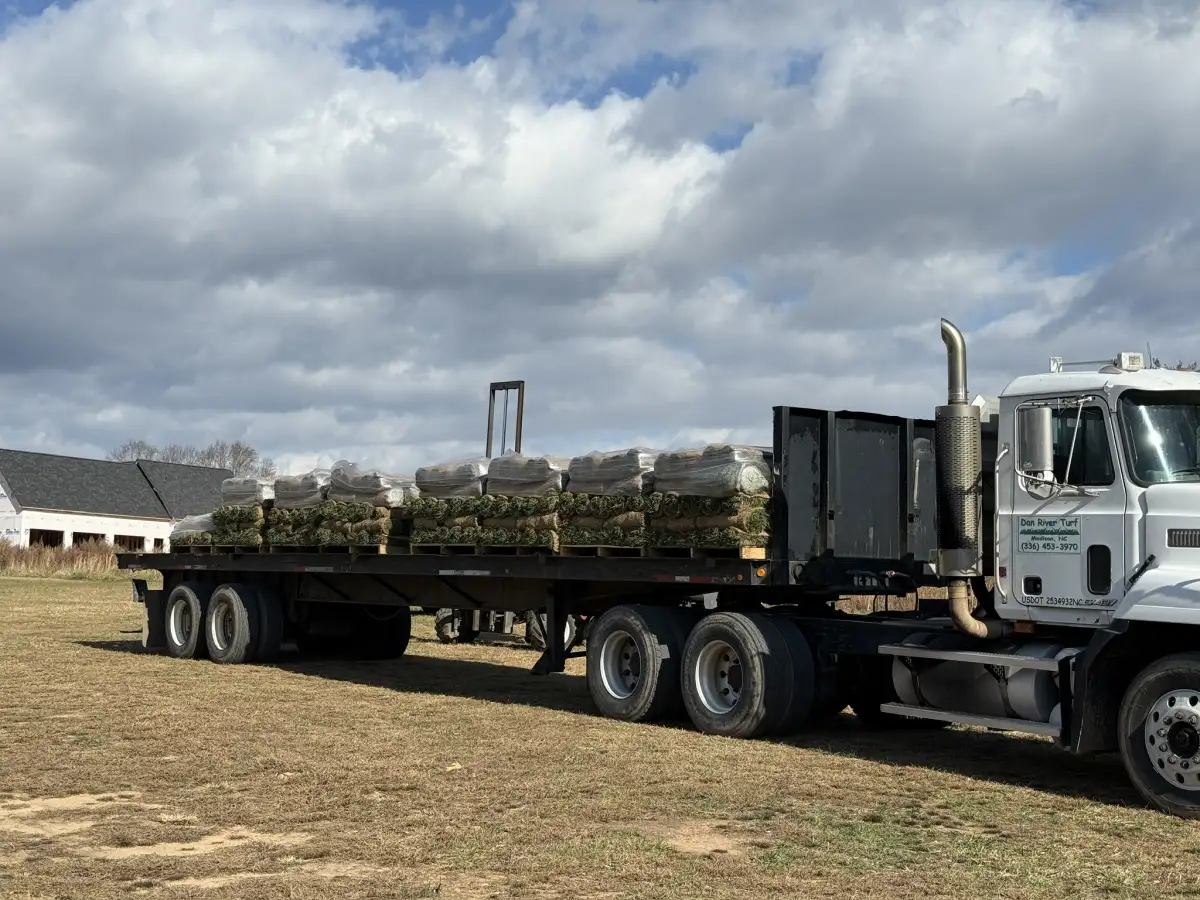
Sod is laid the same day it is cut from the farm. Freshly harvested sod has a narrow window (24-36 hours) before root viability declines. We stagger joints like brickwork, push seams tight together without overlapping, and use landscape staples on slopes to prevent sliding before roots establish.
Step 4: Rolling
After all sod is placed, we roll the entire area with a weighted lawn roller. This eliminates air pockets between the sod and soil, ensuring root-to-soil contact across the entire installation. Air pockets are the number one cause of brown patches in new sod.
Step 5: Initial Watering
We thoroughly soak the new sod immediately after rolling, applying enough water to penetrate through the sod and into the top 3-4 inches of underlying soil. You can check by lifting a corner of the sod - the soil beneath should be wet.
Step 6: Care Instructions
You receive a detailed watering schedule specific to the grass type installed, the season, and your property's conditions. During the first two weeks, the sod needs daily watering. After roots establish, the schedule gradually reduces to the grass type's normal requirements.
Get Your Free Estimate
Ready to get started? Contact us today for a free, no-obligation estimate.
Best Time to Install Sod in North Carolina
Timing affects establishment success more than almost any other factor. Each grass type has an optimal installation window based on its growth pattern.
Tall Fescue (Cool-Season)
Best installed from mid-September through November, when soil temperatures are warm enough for root growth but air temperatures are cool enough to reduce heat stress. Spring installation (March through April) is the secondary window but carries higher risk because the grass faces summer heat before roots are fully established.
Bermuda & Zoysia (Warm-Season)
Best installed from late April through August, when soil temperatures are consistently above 65 degrees and the grass is in active growth mode. Early summer installations give warm-season sod the longest runway to establish before fall dormancy.
Year-Round Capability
While optimal windows exist, sod can technically be installed any time the ground is not frozen in the Piedmont Triad. Winter installations of fescue are viable, though establishment is slower. We advise clients on the trade-offs of off-season installation and adjust our soil preparation and watering guidance accordingly. For a detailed month-by-month breakdown, see our complete sod installation timing guide.
Residential & Commercial Sod Installation
Residential Sod
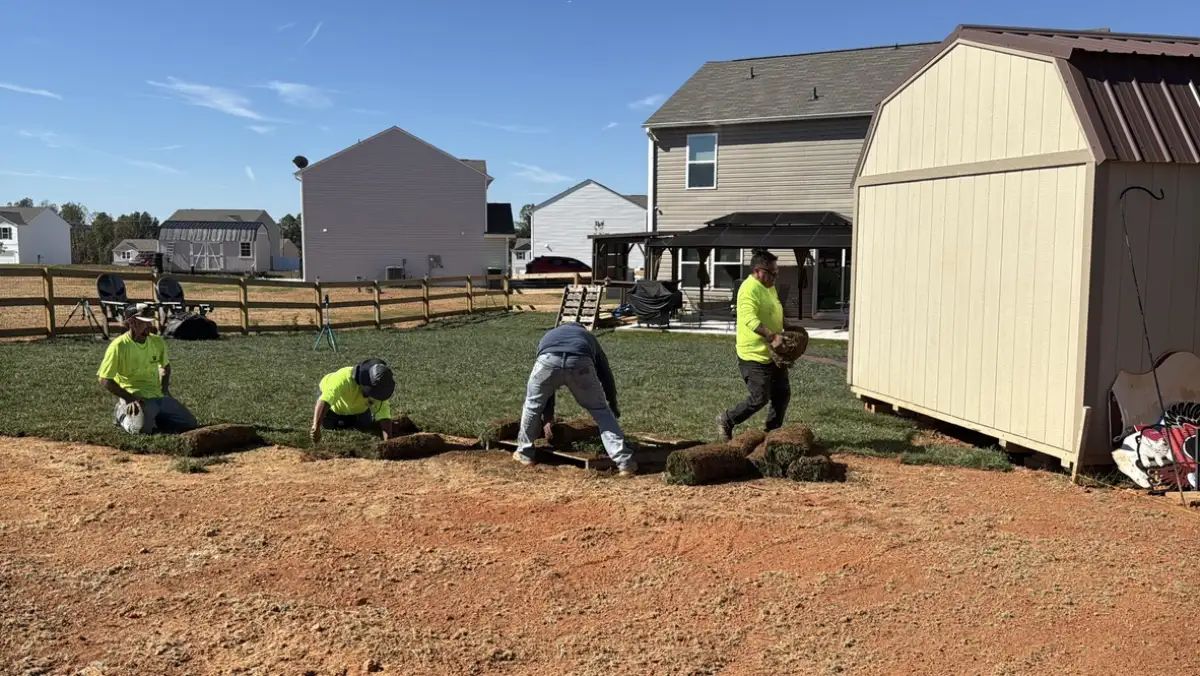
Residential sod projects range from patching bare spots and replacing damaged sections to complete lawn renovations. The most common residential project is a full lawn replacement after regrading, where the old lawn is stripped, the yard is graded smooth, and fresh sod covers the entire property.
For homeowners with existing lawns that have thinned beyond recovery, sod replacement is faster and more reliable than overseeding. A lawn that is less than 50% healthy grass is a candidate for sod replacement rather than renovation.
Commercial Sod
Commercial sod installations cover larger areas on tighter timelines. New construction projects, HOA common areas, retail center landscapes, and apartment complexes all benefit from sod's instant establishment and erosion control properties.
On commercial sites, bermuda is the most common specification due to its durability and low maintenance once established. We coordinate sod delivery and installation schedules with general contractors and property managers to meet project deadlines without compromising installation quality.
Post-Installation Care Guide
The first 30 days after sod installation are critical. Proper watering makes or breaks the establishment process. Here is the schedule we provide with every installation.
Week 1-2: Daily Watering
Water once daily (morning preferred) for 20-30 minutes per zone. The goal is to keep the sod and top 2 inches of soil consistently moist without creating standing water. Lift a corner of sod periodically to check that the soil below is damp.
Week 3-4: Transition Period
Reduce watering to every other day but increase duration to 30-40 minutes. This encourages roots to grow deeper into the soil profile. By the end of week three, sod should resist gentle tugging, indicating root attachment.
Week 5+: Normal Schedule
Transition to a normal watering schedule: 1 inch of water per week for fescue, applied in 2-3 deep sessions rather than daily light watering. Bermuda and zoysia need approximately 1 inch per week during active growth and can tolerate short dry periods.
First Mowing
Do not mow new sod until it has rooted firmly into the soil, typically 14-21 days after installation. Test by trying to lift a corner. If it resists, it is safe to mow. Set your mower to the highest setting for the first cut and never remove more than one-third of the blade height. Once rooted, transition to the normal mowing height for your grass type and consider our weekly mowing service to maintain your investment.
Sod Installation FAQ
Sod Installation in Winston-Salem & Piedmont Triad Communities
We install sod for residential and commercial properties throughout the Winston-Salem metro and Piedmont Triad. Our sod installation crews work daily across these communities, and our route-based scheduling keeps project costs competitive.
Winston-Salem Sod Installation
Winston-Salem is our home base, and we have installed sod in neighborhoods across the city, from the established homes in Buena Vista and Ardmore to new construction in the Clemmons-Lewisville corridor. Winston-Salem's soil is predominantly Piedmont red clay (Cecil series), which requires thorough soil amendment and grading before sod installation to ensure long-term success.
For Winston-Salem homeowners, tall fescue is the most popular sod choice because it stays green throughout the year and tolerates the partial shade from the city's mature tree canopy. Properties with full sun exposure in areas like Kernersville Road and Hanes Mall Boulevard often perform better with bermuda sod, especially for commercial properties that see heavy foot traffic.
Sod Installation Across the Triad
Beyond Winston-Salem, our sod installation services extend to Greensboro, High Point, Kernersville, Clemmons, Pilot Mountain, Oak Ridge, Summerfield, Thomasville, Lexington, and Asheboro. Each area has slightly different soil and sun conditions, and we adjust our soil preparation and grass type recommendations accordingly.
We source sod from regional turf farms within 60 miles of Winston-Salem, ensuring the grass is harvested and installed on the same day for maximum viability. Same-day installation is critical because sod begins losing moisture and root health within hours of being cut from the farm. Pair your new sod installation with our weekly lawn mowing service to protect the investment from the very first cut.
Related Services
Land Grading
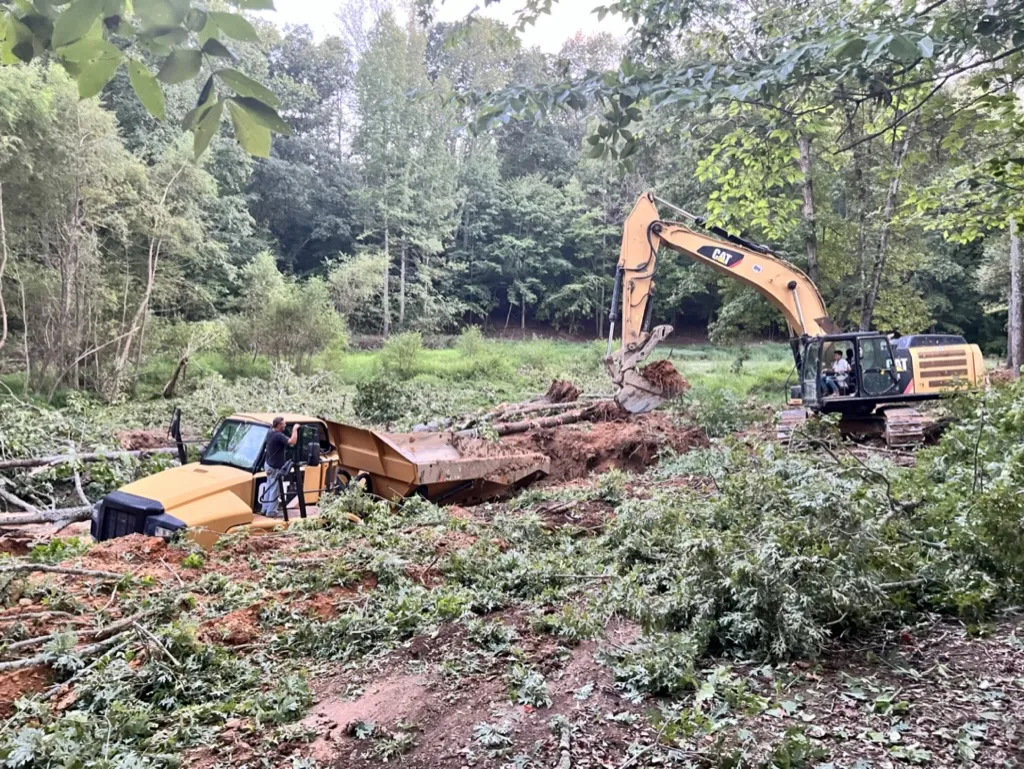
Professional grading creates the smooth, properly sloped surface that sod needs to thrive.
Learn More →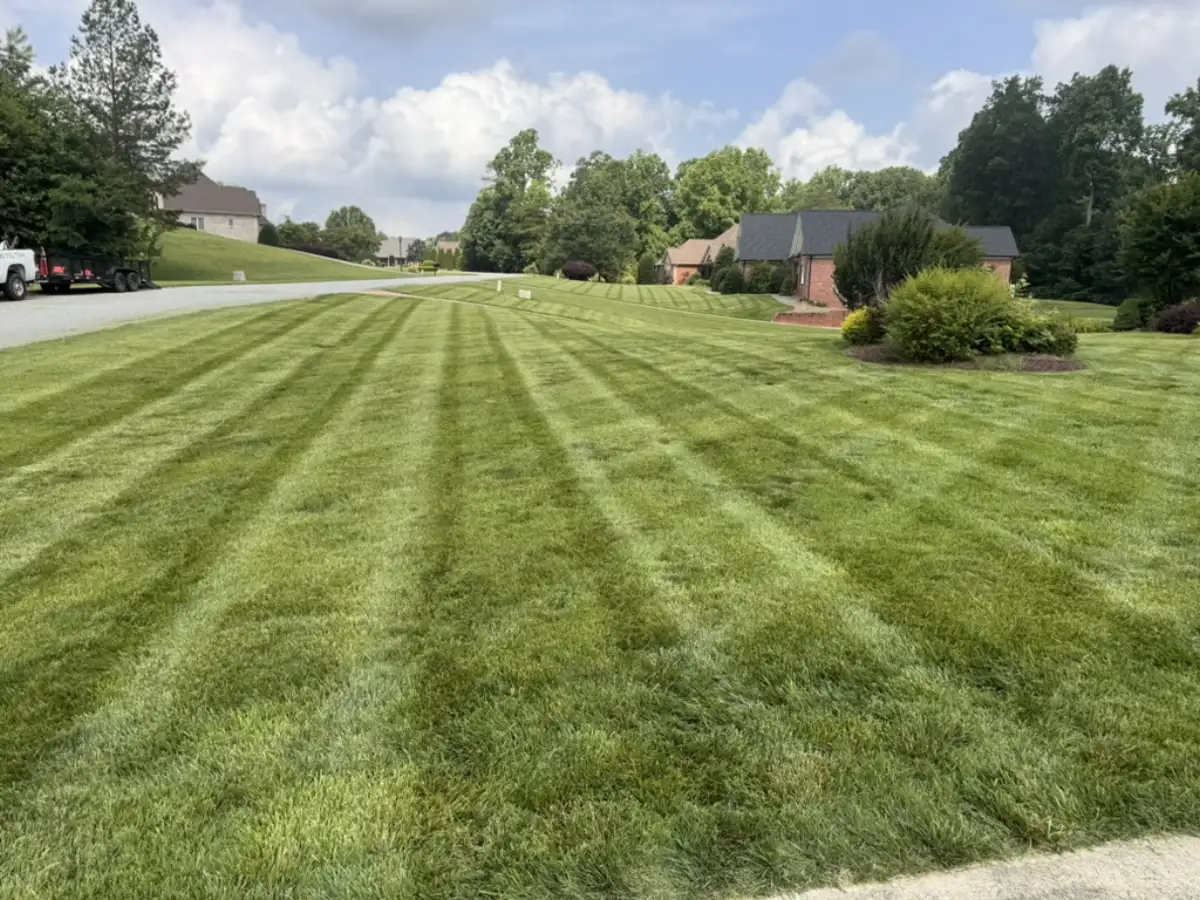
Lawn Mowing
Protect your sod investment with professional weekly mowing at the correct height.
Learn More →
Landscaping
Complete the transformation with planting, mulching, and bed design around your new lawn.
Learn More →