
Land Grading for Better Drainage and a Ready-to-Finish Site
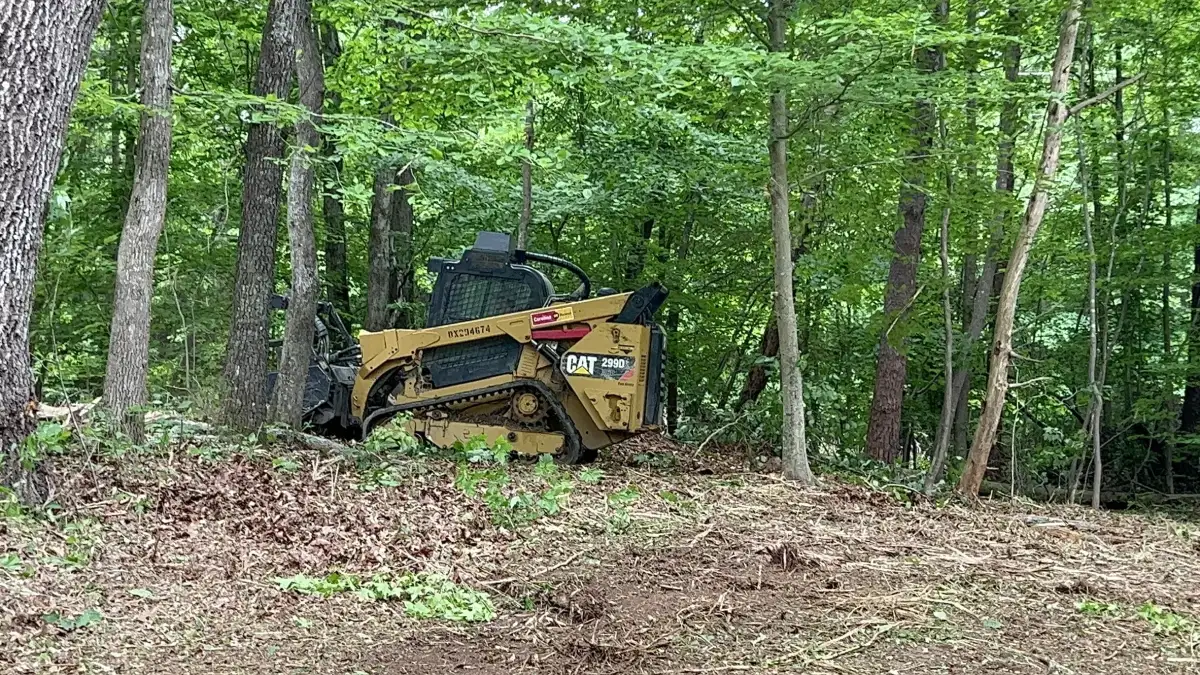
Land grading reshapes the surface of a property so elevations support the way the area needs to drain and be used. Depending on the site, the work can include lowering high areas, filling appropriate low spots, smoothing rough transitions, moving soil within the work zone, and preparing disturbed ground for a stable finish. It can address low areas that stay wet, uneven turf that is difficult to maintain, soil washing from a slope, or ground that is not ready for a lawn or outdoor improvement.
Webber Landscaping is an owner-operated, licensed and insured landscaping company based in Winston-Salem. The team plans land grading for homeowners, businesses, HOAs, churches, rental properties, and shared common areas throughout the Piedmont Triad, including Clemmons, Kernersville, and High Point. An on-site assessment connects the visible problem to the intended result by reviewing nearby structures and hard surfaces, likely water paths, soil condition, equipment access, and the surface that will follow.
The finished use matters from the start. A lawn surface needs a different final texture and preparation than a planting bed, stone area, or hardscape base. If the project includes clearing, excavation, or preparation for several phases of outdoor work, review our broader grading and site preparation service.
Signs Your Yard or Commercial Property May Need Grading
A puddle after one storm does not always point to a grading problem. Repeated patterns are more useful: where water collects, which direction it travels, and what changes after the soil dries. These common signs are worth having evaluated.
Standing Water and Soft Low Spots
Areas that remain soggy long after nearby ground dries can indicate a depression, compacted soil, or a runoff path that ends in the lawn. Regrading may be part of the solution when surface elevations are contributing to the problem.
Runoff Moving Toward Structures
Ground that pitches toward a foundation, garage, patio, or walkway deserves attention. The correct response depends on the full site—not simply adding soil at one edge—because water still needs a safe place to travel.
Washouts, Rills, and Exposed Soil
Channels in bare soil, mulch repeatedly leaving a bed, or thinning turf on a slope can show that water is moving too quickly across the surface. Grade changes and an appropriate stabilized finish can help reduce recurring erosion.
Uneven Ground and Rough Transitions
Humps, depressions, and abrupt changes around driveways, walks, patios, and fence lines can make a yard harder to mow and use. Finish grading creates smoother transitions suited to the planned surface.
Failed Turf or a Planned Lawn Renovation
New seed or sod cannot correct the shape beneath it. When poor elevations or rough construction soil are part of the problem, grading should be considered before sod installation or another lawn finish.
Commercial and HOA Trouble Areas
Entrances, common lawns, parking-lot edges, and shared walkways can develop washouts or soft areas that affect appearance and routine maintenance. The assessment should also account for tenant, resident, and service access.
Can Land Grading Improve a Drainage Problem?
Standing water shows where runoff ends, but the useful question is where that water comes from and where it can go next. Roof discharge, paved surfaces, neighboring elevations, compacted soil, and the shape of the surrounding lot can all affect the same low area.
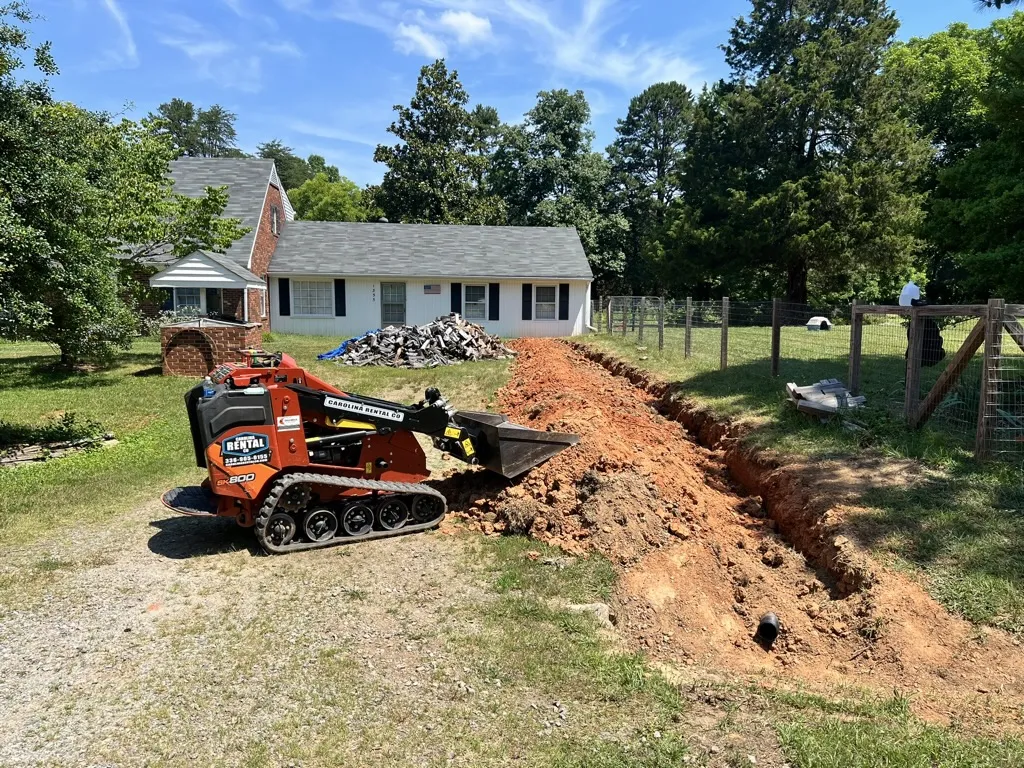
Surface grading may be enough when the problem is a clear depression or an unhelpful slope. Other sites need grading coordinated with a swale, collection point, stone, planting, or another drainage measure. The recommendation should address the cause without redirecting water toward a building, walkway, or neighboring property.
For Winston-Salem properties, Piedmont clay adds another consideration. Clay can hold water near the surface when compacted, and working it while saturated can make the finished soil harder to shape and stabilize. That is why soil condition and recent weather matter when planning the work.
Start With an On-Site Land Grading Assessment
Tell us where water collects or soil washes out, what the area needs to support, and whether access is limited by gates, fences, or finished surfaces. Rain-day photos are helpful when available. We will follow up about the property, assessment, and grading scope.
What to Expect From Assessment Through Finish Grading
The right scope depends on the existing elevations and the intended finish. A drainage repair, a new lawn, and a hardscape base may all involve grading, but they do not call for the same preparation or final surface.
1. Inspect Grade, Runoff, and Access
The assessment begins with the visible high and low points, runoff patterns, structures, hard surfaces, vegetation, utility considerations, and equipment access around the work area.
2. Plan for the Finished Use
The target elevation and surface are planned around what comes next: maintained turf, sod, planting, stone, a walkway, a patio, or another site improvement.
3. Define the Grading Scope
The scope identifies where soil must be cut, filled, or smoothed; whether material needs to be moved; how runoff will leave the area; what equipment can reach the site; and how disturbed ground will be stabilized.
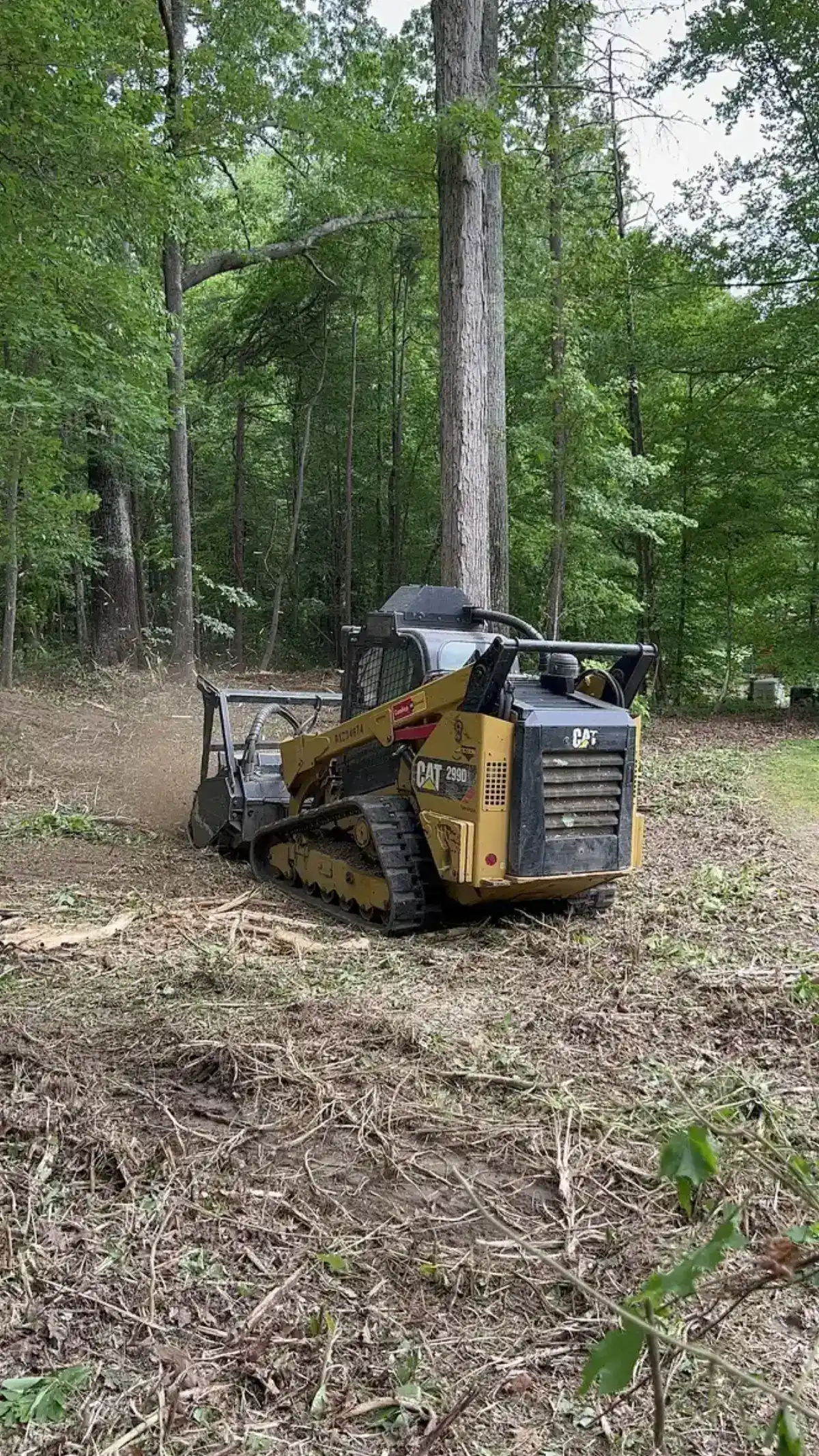
Rough grading establishes the broader shape and drainage direction of the work area. Finish grading then smooths and refines the surface for the planned next step, such as sod, seed, planting, stone, or a hardscape base. The amount of cutting, filling, soil movement, and compaction depends on the existing grade and the finish the area must support.
What Determines the Cost of Land Grading?
There is no reliable one-price answer without seeing the site. Grading estimates reflect the amount of work required to reach a useful, stable finish—not only the square footage.
For more planning context, read our North Carolina land grading cost guide, then request an on-site estimate for property-specific pricing.
Land Grading Considerations for Winston-Salem Properties
Winston-Salem and the surrounding Piedmont Triad combine rolling terrain, clay-heavy soils, humid growing seasons, and periods of heavy rain. Those conditions can make runoff and erosion more noticeable, especially where construction has compacted the ground or an older landscape has settled unevenly.
Clay Moisture Changes the Work
Clay behaves differently when saturated, workable, or very dry. A grading schedule should allow for soil that can be shaped without smearing wet ground or leaving large hard clods that are difficult to finish for turf.
Disturbed Soil Needs a Planned Finish
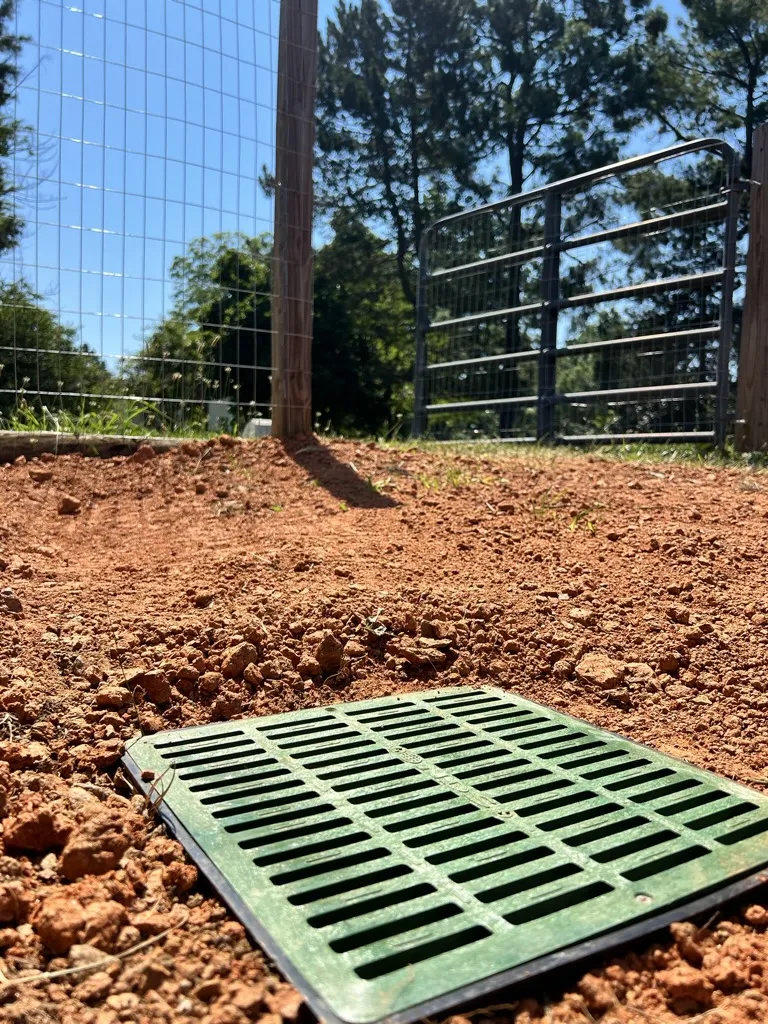
Freshly graded ground should not remain bare longer than necessary. The next step may be sod, seed, planting, mulch, or stone depending on the location and use. A stable finish helps protect the new surface while vegetation establishes.
Observe the Site After Rain
Photos taken during and after rainfall can be useful during an assessment. They show where runoff enters the area, how long water remains, and whether soil or mulch is moving—details that may not be visible on a dry day.
For more local planning detail, read the latest Winston-Salem land grading questions to ask before booking, browse customer reviews, or view completed outdoor work before requesting an assessment.
Land Grading Questions for Winston-Salem Properties
Plan the Surface That Comes After Grading
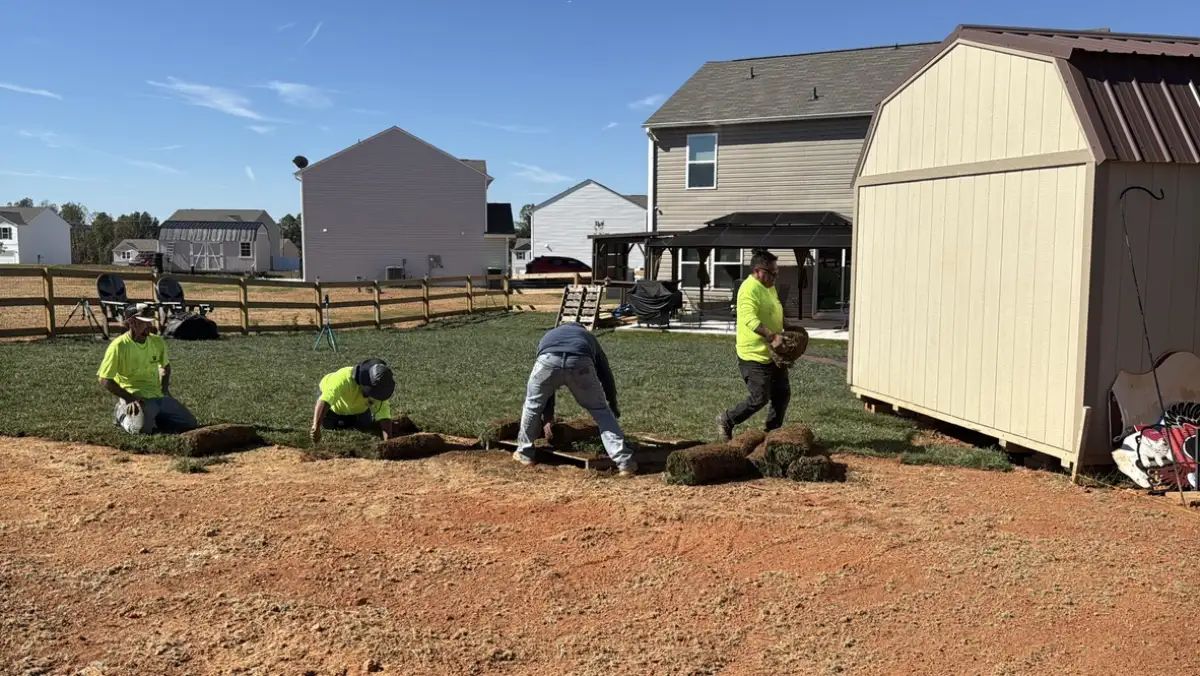
Sod Installation
Prepare a smooth, stable lawn surface before new sod is placed and begins establishing roots.
Explore Sod Installation →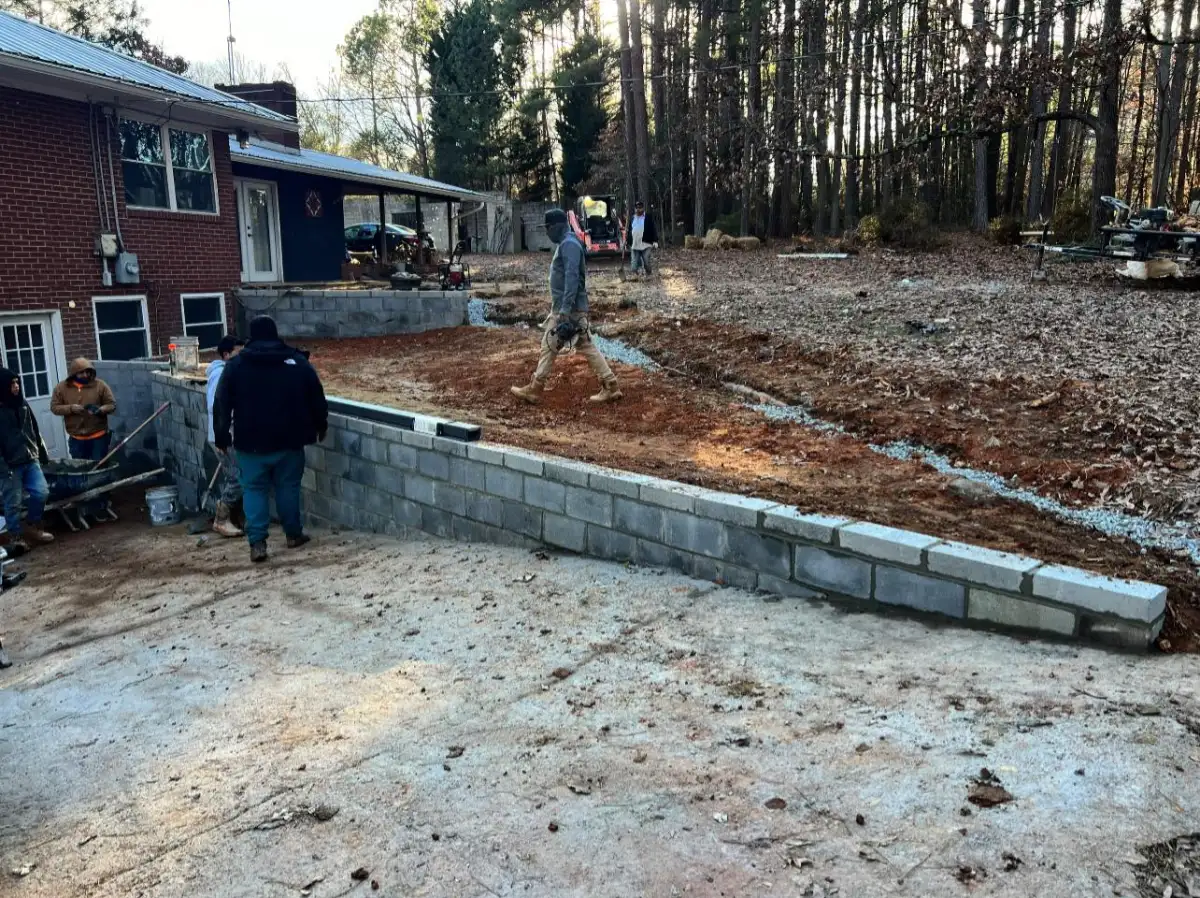
Hardscaping
Coordinate elevations and water flow before adding a patio, walkway, retaining wall, or outdoor living area.
Explore Hardscaping →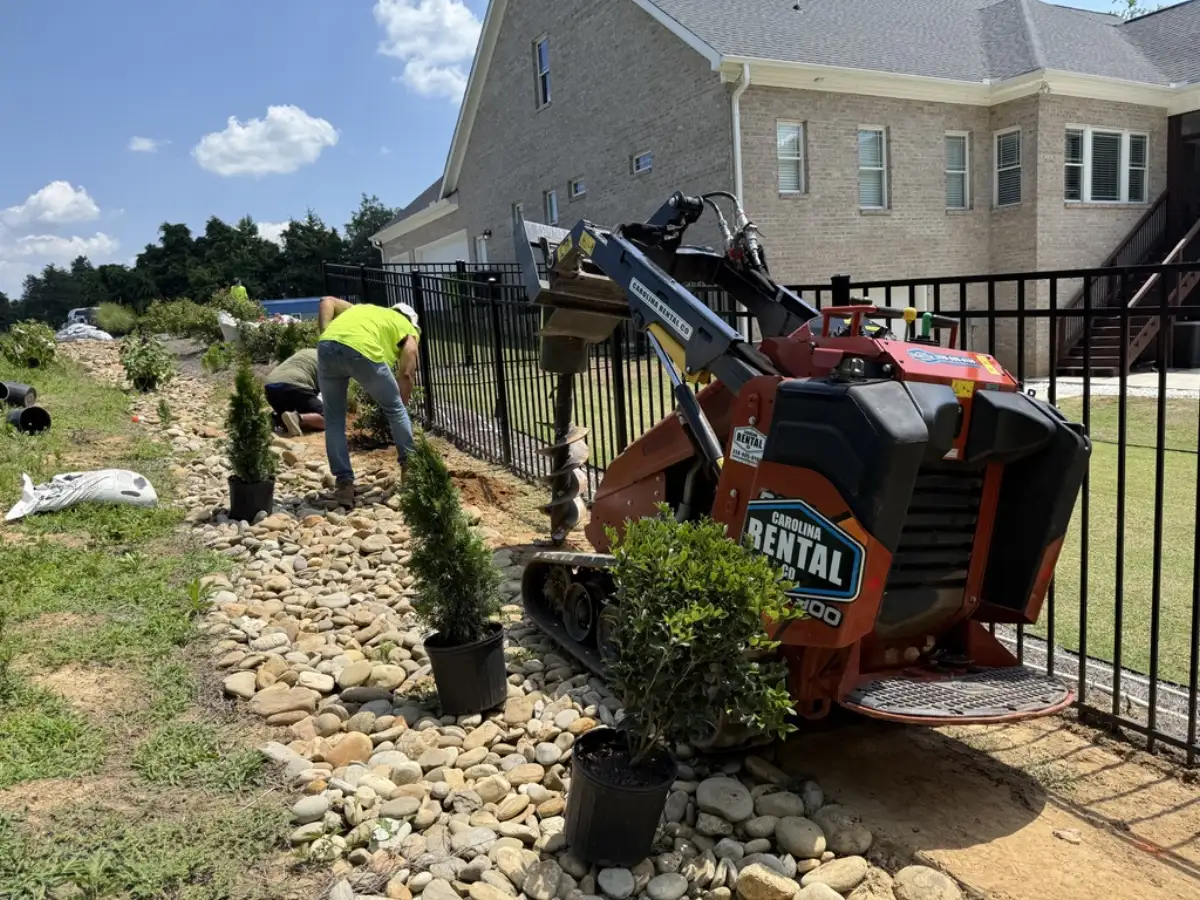
Landscaping
Finish disturbed areas with planting, mulch, and landscape improvements suited to the new grade.
Explore Landscaping →